The CCTS operates through a tiered structure that distinguishes “obligated entities” — those legally required to participate — from voluntary participants. Understanding which category your business falls into is the most urgent compliance question you need to answer in 2026.
What Is an Obligated Entity Under CCTS?
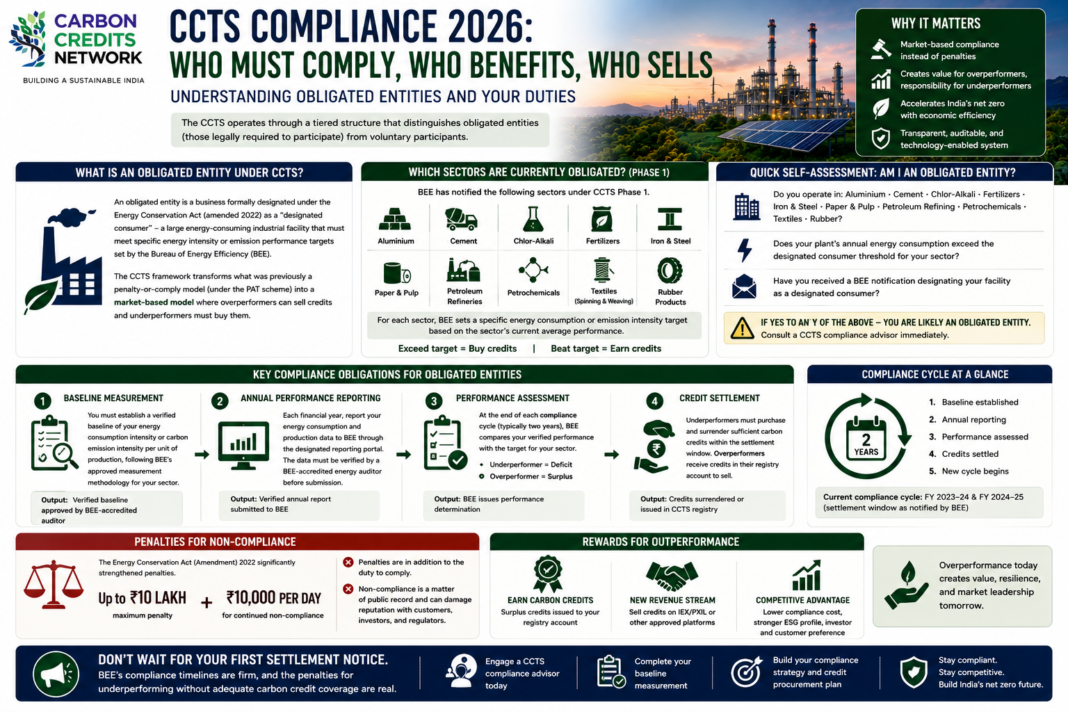
An obligated entity is a business formally designated under the Energy Conservation Act (amended 2022) as a “designated consumer” — a large energy-consuming industrial facility that must meet specific energy intensity or emission performance targets set by the Bureau of Energy Efficiency. The CCTS framework transforms what was previously a penalty-or-comply model (under the PAT scheme) into a market-based model where overperformers can sell credits and underperformers must buy them.
Which Sectors Are Currently Obligated?
The current obligated sectors under CCTS Phase 1 include aluminium, cement, chlor-alkali, fertilizers, iron and steel, paper and pulp, petroleum refineries, petrochemicals, textiles (spinning and weaving), and rubber products. For each sector, BEE sets a specific energy consumption or emission intensity target based on the sector’s current average performance. Facilities that exceed the target must buy carbon credits to cover the gap; those that outperform the target earn credits they can sell.
🏭 Quick Self-Assessment: Am I an Obligated Entity?
Do you operate in: Aluminium · Cement · Chlor-Alkali · Fertilizers · Iron & Steel · Paper & Pulp · Petroleum Refining · Petrochemicals · Textiles · Rubber?
Does your plant’s annual energy consumption exceed the designated consumer threshold for your sector?
Have you received a BEE notification designating your facility as a designated consumer?
If yes to any of the above — you are likely an obligated entity. Consult a CCTS compliance advisor immediately.
Key Compliance Obligations for Obligated Entities
Baseline Measurement: You must establish a verified baseline of your energy consumption intensity or carbon emission intensity per unit of production, following BEE’s approved measurement methodology for your sector.
Annual Performance Reporting: Each financial year, report your energy consumption and production data to BEE through the designated reporting portal. The data must be verified by a BEE-accredited energy auditor before submission.
Credit Settlement: At the end of each compliance cycle (typically two years), your verified performance is compared to your target. If you’ve underperformed, you must purchase and surrender sufficient carbon credits within the settlement window. If you’ve overperformed, credits are issued to your registry account to sell.
Penalties for Non-Compliance
The Energy Conservation Act (Amendment) 2022 significantly strengthened penalties. Obligated entities that fail to meet their targets without sufficient carbon credits face penalties of up to ₹10 lakh plus ₹10,000 per day of continued non-compliance — and reputational damage in an era when large customers and institutional investors increasingly scrutinize supplier ESG performance.
If your business falls within CCTS-obligated sectors, the time for passive observation has ended. BEE’s compliance timelines are firm, and the penalties for underperforming without adequate carbon credit coverage are real. Engage a CCTS compliance advisor, complete your baseline measurement, and begin building your compliance strategy now — not in the year your first settlement is due.