Across India’s digital art scene, a quietly radical movement is gaining momentum. Independent NFT artists are structuring their projects to fund verified carbon offset initiatives — creating a model that links cultural value to ecological value in ways that traditional carbon markets have never achieved.
The Model: How Climate-Linked NFT Art Works
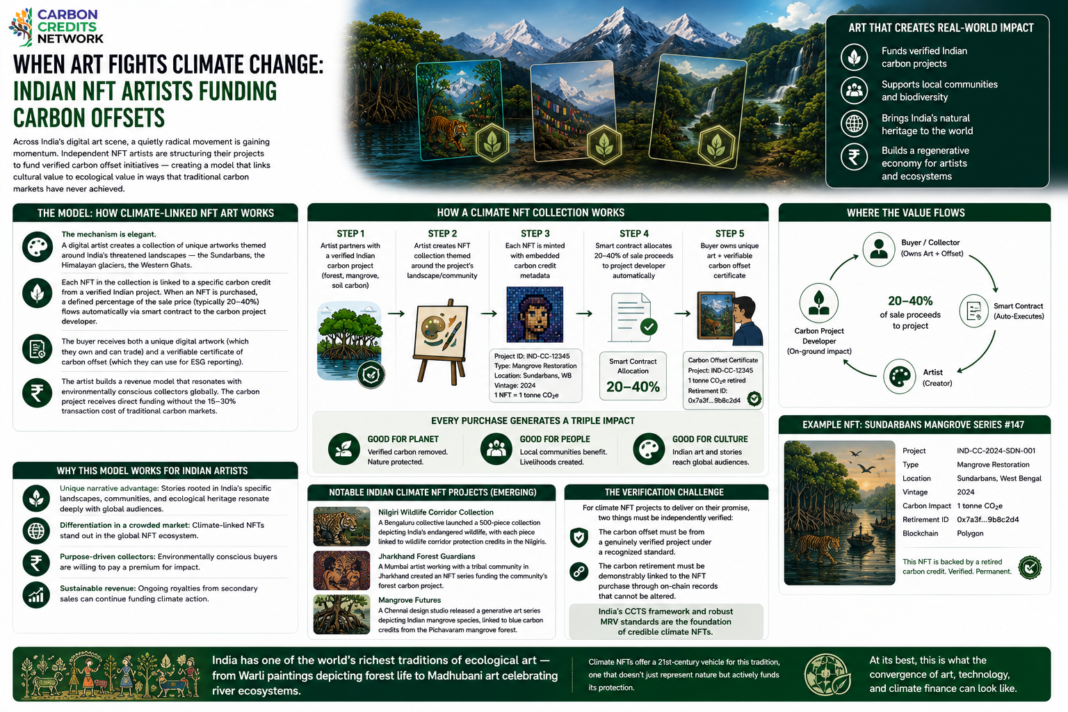
The mechanism is elegant. A digital artist creates a collection of unique artworks themed around India’s threatened landscapes — the Sundarbans, the Himalayan glaciers, the Western Ghats. Each NFT in the collection is linked to a specific carbon credit from a verified Indian project. When an NFT is purchased, a defined percentage of the sale price (typically 20–40%) flows automatically via smart contract to the carbon project developer.
The buyer receives both a unique digital artwork (which they own and can trade) and a verifiable certificate of carbon offset (which they can use for ESG reporting). The artist builds a revenue model that resonates with environmentally conscious collectors globally. The carbon project receives direct funding without the 15–30% transaction cost of traditional carbon markets.
🎨 How a Climate NFT Collection Works
Step 1: Artist partners with a verified Indian carbon project (forest, mangrove, soil carbon)
Step 2: Artist creates NFT collection themed around the project’s landscape/community
Step 3: Each NFT is minted with embedded carbon credit metadata
Step 4: Smart contract allocates 20–40% of sale proceeds to project developer automatically
Step 5: Buyer owns unique art + verifiable carbon offset certificate
Why This Model Works for Indian Artists
India’s NFT art scene has been looking for differentiation in an increasingly crowded global marketplace. Climate-linked NFTs offer Indian artists a powerful narrative advantage: stories rooted in India’s specific landscapes, communities, and ecological heritage resonate with a global audience motivated by environmental impact.
Notable Indian Climate NFT Projects
A Bengaluru collective launched a 500-piece collection depicting India’s endangered wildlife, with each piece linked to wildlife corridor protection credits in the Nilgiris. A Mumbai artist working with a tribal community in Jharkhand created an NFT series funding the community’s forest carbon project. A Chennai design studio released a generative art series depicting Indian mangrove species, linked to blue carbon credits from the Pichavaram mangrove forest.
The Verification Challenge
For climate NFT projects to deliver on their promise, two things must be independently verified: the carbon offset must be from a genuinely verified project under a recognized standard, and the carbon retirement must be demonstrably linked to the NFT purchase through on-chain records that cannot be altered.
India has one of the world’s richest traditions of ecological art — from Warli paintings depicting forest life to Madhubani art celebrating river ecosystems. Climate NFTs offer a 21st-century vehicle for this tradition, one that doesn’t just represent nature but actively funds its protection. At its best, this is what the convergence of art, technology, and climate finance can look like.